Few wildlife destinations are as dramatic as the Ngorongoro Crater. Descend the steep rim road through morning mist and you arrive on a vast, grassy floor where lions rest beside zebra herds, black rhinos graze in the distance and flamingos shimmer on a soda lake. Everything is within easy sight, framed by walls that rise hundreds of meters on every side.
A Ngorongoro Crater safari is a highlight of almost every Tanzania itinerary, and for good reason. This guide explains what the crater is, what you can see, when to go, how much it costs and how to plan the day so that you get the most from it.
What Is the Ngorongoro Crater?
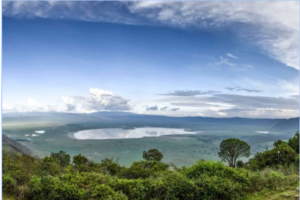
The Ngorongoro Crater is the world’s largest intact volcanic caldera. It formed when a giant volcano collapsed in on itself millions of years ago, leaving a bowl roughly 19 kilometers across, with a floor covering about 260 square kilometers. The walls rise some 600 meters above the floor, and the rim sits at more than 2,000 meters above sea level.
The crater lies within the Ngorongoro Conservation Area (NCA), a UNESCO World Heritage Site in northern Tanzania. Unlike a national park, the NCA is a multiple-use area where Maasai pastoralists live alongside wildlife. That mix of conservation and living culture is part of what makes it unusual.
Because the crater walls act as a natural enclosure, it supports a dense, largely resident population of animals, with a total often estimated at around 25,000 large mammals. Permanent water, fresh grazing and a variety of habitats keep many species in the crater all year.
Wildlife You Can Expect to See
The crater’s compact size and open terrain make wildlife viewing unusually efficient. A single game drive can cover grassland, swamp, forest and lake in a few hours.
Lions. The crater has one of Africa’s densest lion populations, and prides are often seen resting in the open or hunting at dawn.
Black rhinos. The crater is one of the best places in Tanzania to see this critically endangered species. Sightings are never guaranteed, and the animals are usually seen at a distance, so binoculars help.
Elephants. Large bulls with impressive tusks wander the forested edges and the Lerai Forest.
Buffalo, hippos and hyenas. Buffalo herds graze the plains, hippos wallow in the Ngoitokitok and Mandusi areas, and spotted hyenas are abundant.
Wildebeest, zebra and gazelles. Large herds of resident grazers are present year-round, and they are the main prey for the crater’s predators.
Cheetahs, servals and jackals. The grassland suits cheetahs, and servals and golden jackals appear regularly for patient observers.
Birdlife. More than 500 bird species have been recorded in the area, including flamingos on Lake Magadi, secretary birds, crowned cranes, ostriches and many raptors.
A note on leopards. Leopards live in the forested areas of the rim and the Lerai Forest, but they are elusive. Do not expect a sighting.
Where the Crater Fits in a Tanzania Itinerary
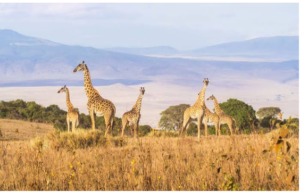
Ngorongoro is a standard stop on Tanzania’s northern circuit, usually between Lake Manyara or Tarangire and the Serengeti. A typical routing might be:
- Tarangire or Lake Manyara (day 1 to 2)
- Ngorongoro Crater (day 3)
- Serengeti (days 4 to 6)
The crater is best treated as a full-day experience, so most itineraries allow one night on the rim and a descent the next morning. Staying overnight on the rim gives you early access and avoids a long drive on the day itself.
What a Crater Day Looks Like
Early morning. Most safaris leave the lodge before dawn and descend by 4×4 along a steep, winding road. Mist often fills the crater at first light, then burns off as the sun rises.
Morning game drive. This is the prime time for wildlife. Predators are often active, and the light is beautiful for photography.
Picnic lunch. A scenic picnic spot such as Ngoitokitok Spring offers a chance to stretch your legs in a designated area, with hippos nearby. Watch your food, as black kites are known to swoop on unattended lunches.
Afternoon. Wildlife activity tends to slow in the midday heat. Many visitors begin the ascent in the early afternoon, as time inside the crater is limited.
Time limit. Visits to the crater floor are regulated, and the time you can spend inside is capped. Check the current rules with your operator, as they can change.
Costs: What to Budget
Ngorongoro is a premium destination, and fees are set by the Ngorongoro Conservation Area Authority rather than by operators.
Conservation area fee. Entry is charged per adult per 24 hours. Figures vary slightly by source, but they are in the region of $70 to $82 per adult per day for foreign visitors.
Crater service fee. To descend into the crater, you pay a separate fee. This is $295 per vehicle, charged per vehicle rather than per person, so sharing a vehicle spreads the cost. dumaexplorer
Accommodation. Rim lodges range from mid-range options to very high-end properties with spectacular views. Budget camping is available in designated sites for those on a tighter budget.
Safari package costs. For reference, current estimates put budget safaris at $400 to $500 per person per day, mid-range at $500 to $700, and luxury at $700 to $1,500. Crater day costs are built into these rates, but the fees above are a significant component. twowanderingsoles
Extras. Tips for guides and camp staff, drinks and any optional activities are usually additional.
Fees and tariffs are revised from time to time, so confirm current figures with your operator and the NCAA before you book.
Best Time to Visit
The crater can be visited year-round, because the wildlife is resident and does not migrate in and out.
June to October (dry season). This is the peak time, with clear skies and good visibility, and wildlife gathers near water. It is also the busiest and most expensive period, so book well ahead.
January to February. A shorter dry spell with fewer crowds, and the nearby southern Serengeti calving season makes it a good time to combine the two.
March to May (long rains). The wettest months bring lush scenery, lower rates and fewer visitors, but roads can be muddy and some camps close. Rim temperatures are cool and misty.
November to December (short rains). Intermittent showers with green landscapes and moderate crowds.
Because the rim sits at high altitude, mornings and evenings can be surprisingly cold in any month. Pack warm layers.
Practical Tips for Your Crater Safari
- Go early. Being among the first vehicles into the crater gives you quieter roads and better light.
- Choose your vehicle wisely. A private 4×4 with a pop-up roof gives more freedom than a shared vehicle, especially for photography.
- Bring binoculars. Many rhino and bird sightings are at a distance.
- Dress in layers. It is cold on the rim at dawn, warm on the crater floor and cool again by evening.
- Pack a good camera. A telephoto lens of at least 200 millimeters helps, along with plenty of battery and storage.
- Protect yourself from the sun. Hat, sunscreen and sunglasses are essential on the open crater floor.
- Respect the rules. Stay in your vehicle except at designated picnic sites, keep noise low at sightings, and follow your guide’s instructions.
- Check health and entry requirements. Visa rules, vaccinations and malaria prevention vary by nationality, so consult official sources well before travel.
- Buy insurance. Make sure it covers safari activities and medical evacuation.
Responsible Travel in Ngorongoro
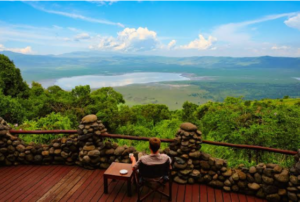
The Ngorongoro Conservation Area balances wildlife protection with the needs of the Maasai and other communities who live there. To travel responsibly:
- Choose operators that employ local staff and pay fair wages
- Visit cultural sites only through reputable, community-supported arrangements
- Avoid purchasing items made from wildlife products
- Keep to marked tracks and take litter with you
- Respect the animals’ space, particularly around rhinos and breeding predators
Well-managed tourism helps fund the conservation of one of Africa’s most important wildlife areas.
Combining Ngorongoro With Other Destinations
Serengeti. The most common pairing. The route between the two passes through scenic highlands and Maasai land, and many itineraries include the Olduvai Gorge, the famous archaeological site known for early human fossils.
Tarangire and Lake Manyara. These smaller parks add elephants, baobabs and birdlife and make good first stops.
Zanzibar. A beach extension after the safari is popular with honeymooners and families.
Kilimanjaro. Some travelers pair a safari with a climb, with the safari usually following the trek as a way to rest.
Conclusion
A Ngorongoro Crater safari is one of the most rewarding single days you can spend on a Tanzania trip. The caldera’s enclosed ecosystem, dense wildlife and spectacular scenery give you a high chance of memorable sightings in a short time, including lions, elephants and, with luck, a black rhino. Plan for an early start, a private vehicle and warm clothing, and budget for the fixed fees that make up a substantial part of the cost. Combined with the Serengeti and other northern circuit parks, the crater adds a different kind of drama to your safari, one of walls, mist and an entire ecosystem laid out beneath you.
Key Takeaways
- The Ngorongoro Crater is the world’s largest intact volcanic caldera, about 19 kilometers wide with a floor of roughly 260 square kilometers.
- It is part of the Ngorongoro Conservation Area, a UNESCO World Heritage Site where wildlife and Maasai communities coexist.
- Wildlife is resident year-round, with lions, elephants, buffalo, hippos, hyenas, flamingos and one of Tanzania’s best chances to see black rhino.
- Leopards are present but elusive.
- A crater service fee of $295 per vehicle applies, plus daily conservation fees per person.
- June to October is the busiest and driest period, but the crater can be visited year-round.
- Go early, bring layers and binoculars, and expect a time limit on the crater floor.
- It fits naturally between Tarangire or Manyara and the Serengeti.
Frequently Asked Questions
- How long should I spend in the Ngorongoro Crater?
Most visitors spend a full morning to early afternoon on the crater floor, with an overnight on the rim before or after. Time inside is regulated, so check the current limits.
- What is the best time of year for a Ngorongoro Crater safari?
The dry season from June to October offers the clearest conditions, but wildlife is resident and the crater can be visited year-round. - Can I see the Big Five in the crater?
Lions, elephants, buffalo and black rhinos can all be seen, though rhinos are usually distant. Leopards are present but rarely seen, so a full Big Five sighting is not guaranteed. - How much does it cost to enter the crater?
You pay a daily conservation area fee per person and a crater service fee of about $295 per vehicle. Fees change, so confirm current rates with your operator. - Is it cold at Ngorongoro?
The rim is at high altitude and can be cold and misty, especially early in the morning and in the evening. Bring warm layers, even in the dry season. - Do I need a 4×4 vehicle?
Yes. The descent road is steep, and safari vehicles are 4x4s, usually with pop-up roofs. - Can I visit the crater on a day trip?
Yes, from Arusha or Karatu, though it makes for a very long day. Staying on or near the rim is more comfortable and gives you an earlier start. - Is the crater suitable for children?
Generally yes. Children are usually welcome on game drives, though some lodges and activities have age limits. Ask your operator about family-friendly options. - Can I combine the crater with the Serengeti?
Yes. This is the standard northern circuit pairing, and the route also passes Olduvai Gorge. - Do the Maasai live in the crater?
Maasai live in the wider conservation area, and access to the crater floor for settlement is restricted. Cultural visits are typically arranged in villages outside the crater through responsible operators.
Note: Park fees, crater regulations and seasonal conditions change. Treat the figures here as planning estimates and confirm current details with the Ngorongoro Conservation Area Authority or a licensed operator before booking.
I can also put this into a Word doc or a ready-to-publish web page if you’d like.